
Do You Need Your Wisdom Teeth Removed If They Don't Hurt? What Houston Patients Should Know
Your wisdom teeth feel fine, yet your dentist keeps bringing them up. It's a fair thing to question, and plenty of people around Houston ask it. The honest answer depends on what's happening under the gum, and pain can't tell you that.
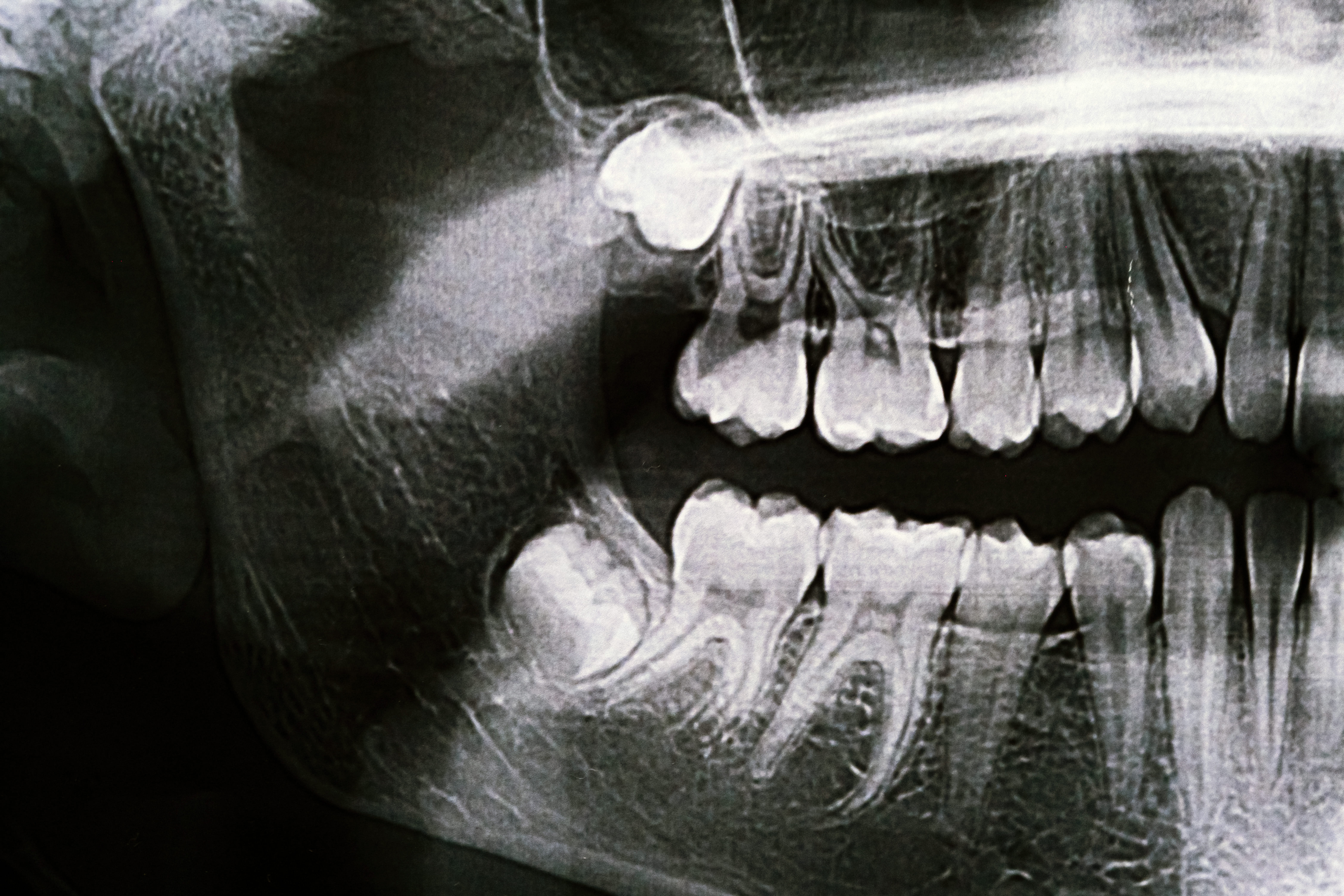
impacted
Short Answer
Not always. Wisdom teeth that have grown in fully, sit straight, and are easy to clean can often stay. Teeth that are stuck under the gum, only partly through, or too far back to brush well deserve a closer look even when they don't hurt.
Key Takeaways
- No pain doesn't mean no problem. Wisdom teeth can cause damage quietly.
- An X-ray is the only way to see what's going on under the gums.
- Healthy, fully erupted teeth that you can clean well can usually be watched instead of removed.
- Younger patients tend to heal faster, so waiting isn't always the easier choice.
- A bad taste, sore gums, or swelling behind your last molar means it's time to be seen.
Why pain is a poor test
Pain tends to show up late. A wisdom tooth growing sideways can push on the molar in front of it for years without a twinge. A tooth that's only partly through leaves a small flap of gum where food and bacteria collect, and the first clue is often a bad taste or a tender spot, not a toothache. Cysts can also form around trapped teeth and grow slowly, with no warning at all.
When a pain-free wisdom tooth can stay
Keeping it is reasonable when the tooth:
- Has come all the way through the gum
- Lines up properly with your bite
- Can be brushed and flossed on every side
- Shows no decay or gum problems on X-ray
Even then, it needs regular checkups so a small change doesn't get missed.
When removing it early makes sense
Dentists often suggest taking out a wisdom tooth before it hurts if it's impacted (trapped in the gum or bone), only partly erupted, decayed, or pressing on the tooth beside it. A cyst or gum infection on an X-ray is another reason.
Age matters too. In the late teens and early twenties, the roots aren't fully formed and the jawbone is less dense, which often means an easier extraction and faster healing. That's why many dentists raise the subject early.
What your dentist looks for
On a panoramic X-ray, the dentist checks the tooth's angle, how much is still under the gum, how close it sits to the nerve below or the sinus above, and whether nearby teeth look healthy. Those details decide whether you watch it or plan removal.
Getting checked without the hassle
Putting off an X-ray is easy when your day is already full. If you work near the Texas Medical Center, or you live in Braeswood and drive the I-610 South Loop most days, it helps to book somewhere that fits your routine. A lunch break or the drive home from work is a more realistic time to get answers than a free weekend.
Our S Loop W office at 3264 S Loop W offers wisdom tooth evaluations, with same-day and walk-in visits available when the schedule allows.
What to do next
- Get a current panoramic X-ray if you haven't had one lately.
- Ask whether each tooth is impacted, how close it is to the nerve, and whether you can clean it well.
- If your dentist says to watch it, ask how often to recheck.
- Don't wait for pain if you notice swelling, a bad taste, or gum soreness.
If the X-ray shows a tooth that should come out, you can read how the process works on our wisdom tooth extraction page. Not sure yet? Start with the evaluation, and see what to expect at your first visit. You can decide what to do once you've seen your own X-ray.
FAQ
Can wisdom teeth stay in for life? Yes, if they're healthy, fully through the gum, and easy to clean. They still need regular checkups, since problems can start years later.
Can an impacted tooth cause damage without hurting? Yes. It can wear into the neighboring tooth, trap bacteria, or form a cyst without any pain. These problems are often found on an X-ray before you feel anything.